

Lululemon: No More Stretch
The Once Popular Brand Is Stuck In a Downward-Dog
There was a time when Lululemon could slap its tiny logo on a pair of black leggings, charge $128 and watch suburban America stampede toward the register.
Those days appear to be doing downward dog straight into the floor.
Lululemon just delivered another ugly quarter. Revenue fell 4% to $2.4 billion, comparable sales dropped a brutal 9%, and sales in the Americas—the market that built this stretchy little empire—fell 8%. Americas comparable sales were even worse: down 12%. Operating income dropped 13%. And management responded by cutting its full-year forecast. Again.

Shares plunged roughly 20% Friday morning, trading around $100 and threatening to erase another $2.5 billion of market value. The stock is now hovering around levels last seen in 2018.
Remember 2024? Lululemon traded above $500 early that year. Today we're talking roughly $100. That's not a correction, that's not a clearance rack, that’s a Goodwill store.
Lululemon's bigger problem isn't simply the economy. It's that customers have options now.
Alo Yoga has become the cooler kid at Pilates. Vuori owns that California I just meditated but somehow also have a private-equity job look. Skims keeps expanding its gravitational pull. And beneath all of them sits an endless army of perfectly acceptable leggings and performance wear selling for dramatically less.

Reuters notes that Lululemon is losing market share amid competition from brands including Alo and Skims, while analysts point to merchandising mistakes and an increasing reliance on promotions.
And from the ones that matter (CUSTOMERS) they have finally discovered that Lycra is not a precious metal. Spend a few more steps in the mall and you are likely to find the same material leggings for $68.00.
And what about those colors? Who melted the sad crayon box??
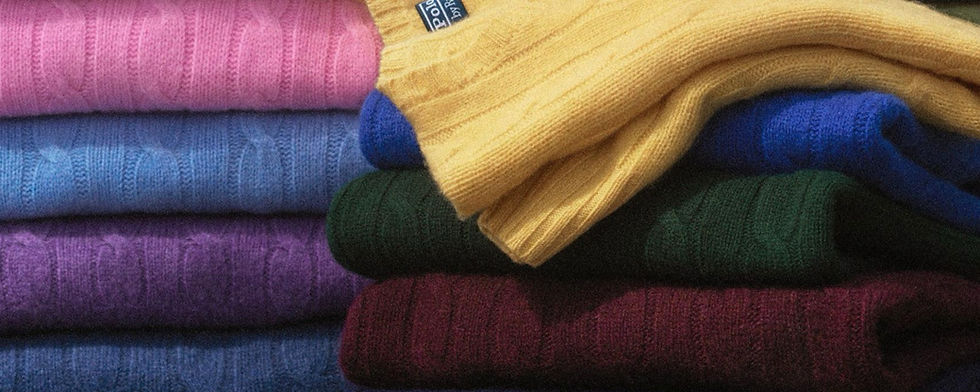
Walk through Lululemon lately and some of the color assortment looks like somebody spilled a coffee smoothie across a Pantone book. Washed-out lavender. Murky green. Dusty pink. Questionable brown. Something vaguely resembling peach but sort of and maybe? There is even a color apparently inspired by hospital pudding. No joke.

Yes, Lulu still makes terrific basics. But too much merchandise has suffered from the classic fashion-company disease: Lets be different and charge more!
Nobody was begging for another strangely tinted $118 pant. Customers wanted flattering, sexy, athletic, modern and for Gods sake, not Mildewed Sage No. 7.
ENTER THE SAVIOR…FROM NIKE?
And now we arrive at the part you couldn't make up. Incoming CEO Heidi O'Neill takes over September 8 after spending 25 years at Nike, eventually becoming President of Consumer, Product & Brand. At Nike.
That Nike! The Nike whose stock has spent the past five years doing its best impression of a ski slope.

Nike shares peaked around $179 in November 2021. Recently? About $39. That's a collapse of roughly 78% from the peak, wiping out more than $200 billion in market value along the way. Over the last five years alone, the stock is down roughly 75%. Its shares recently hit their lowest level since 2014. China has been a mess. Product innovation lost some of its magic.
Competitors like On and Hoka came charging through the door. And Nike itself has been stuck in a prolonged turnaround trying to figure out how one of the most powerful brands on Earth managed to lose so much heat.
Perfect! Let's hire one of their veterans to fix Lululemon. What could possibly go wrong?
This isn't to say O'Neill isn't talented. She spent decades inside one of the greatest marketing machines ever created and has serious experience in product, brand and consumer strategy.
But the optics are almost too delicious. Lululemon's stock is getting murdered because the brand has lost excitement, competitors are eating its lunch, consumers are questioning its pricing and the product assortment desperately needs fresh thinking.
So who's riding in to save the day?
An executive from another iconic athletic brand whose stock has cratered roughly 75% in five years while it wrestles with…lost excitement, aggressive competitors, pricing questions and the need for fresh thinking.
Brilliant.


Comments