

The Shadow Daytona

Rolex doesn’t do eccentric because at Rolex, it’s all about control. It operates on three standards: discipline, ruthlessness and (Swiss) industrial perfection. Which is exactly why the Zenith-era Daytona Ref. 16516 in platinum with a lapis lazuli dial feels like a whispered secret and something that wasn’t supposed to escape Geneva.
This watch breaks Rolex’s own rules.
In the late ‘90s, while the world knew Daytona’s in steel, two-tone, and gold, a handful of platinum pieces quietly appeared. They were never cataloged, never advertised and to this point, never explained. The 16516 is the apex predator of that shadow batch.
A 40mm platinum case, powered by the Zenith-based caliber 4030, fitted with a hardstone lapis dial of deep blue, flecked with natural gold, paired absurdly (and perfectly) with a turquoise leather strap. It shouldn’t exist, and that’s the point of this article.
In 2020, Sotheby’s sold one (possibly the only one) for $3.27 million, setting the record for an automatic Daytona at the time. Not because of hype, but because of what it represented: Rolex, off script.

From 1988 to 2000, Rolex relied on Zenith’s El Primero as the backbone of the Daytona. They modified it heavily, slowed it down, made it more “Rolex” but it was still, at its core, borrowed brilliance. These are the watches collectors obsess over now: transitional, mechanical and slightly rebellious by Rolex standards. But even within that era, the 16516 sits apart, by itself, behind a curtain of rare.
Which brings us to the man behind the curtain: Patrick Heiniger.

Heiniger ran Rolex from 1992 to 2008 and turned it into the modern luxury juggernaut we know today with tight supply, rising prices and zero transparency. The blueprint for scarcity is it’s #1 strategy. But here’s the twist: while publicly enforcing discipline, privately Heiniger may have indulged in a bit of creative rebellion.
The prevailing theory is that these platinum Zenith Daytona’s: lapis, mother-of-pearl, turquoise, were commissioned pieces either for Heiniger himself or for a very tight inner circle. No marketing. No press. No release. No explanation. Just watches that quietly appeared and then disappeared until they resurfaced years later at auction, like artifacts from a parallel Rolex universe.
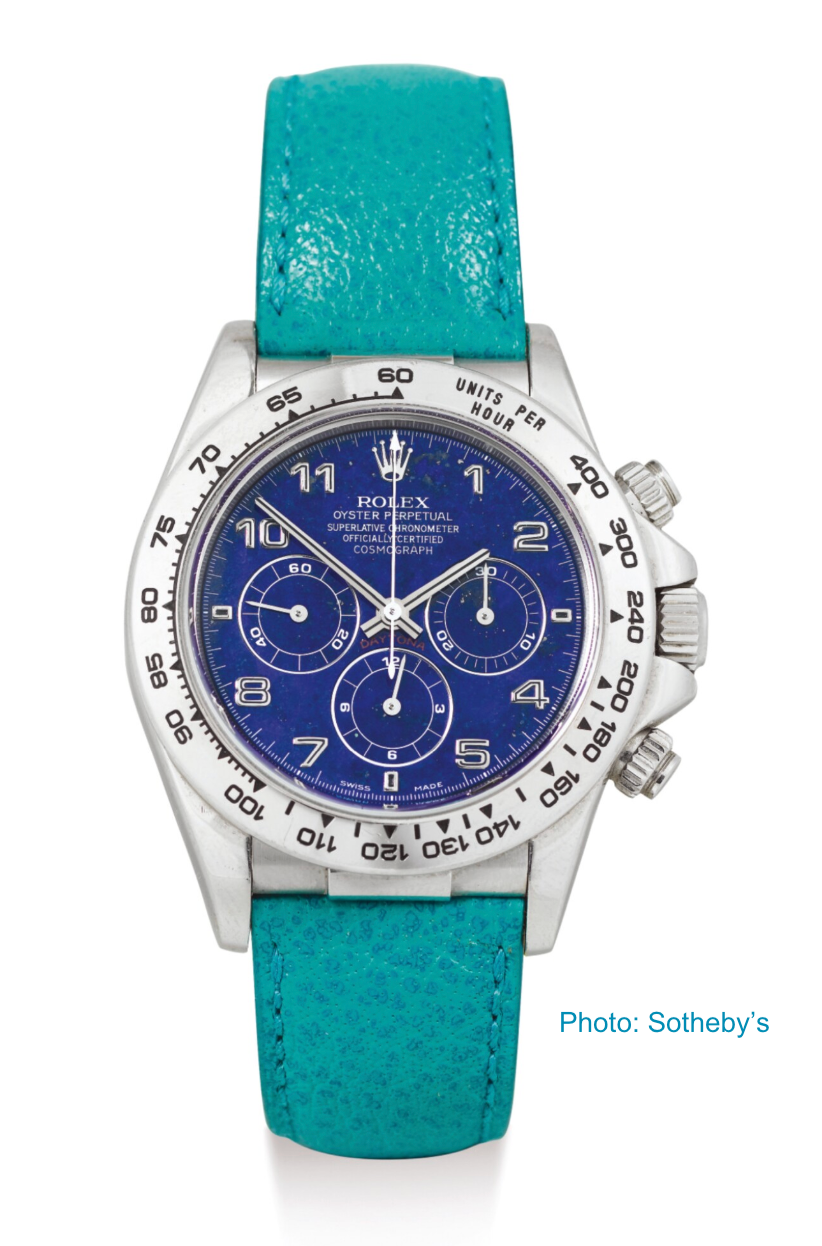
Look at the details: Arabic numerals instead of indices, hardstone dials Rolex almost never touches and platinum cases years before the brand officially acknowledged platinum Daytona’s. This isn’t product development. This is patronage. Old-world, Patek-style “we’ll make it because we can” except coming from a brand that built its empire on saying no. That’s what makes the 16516 so compelling. It’s not just a watch but rather a contradiction. Rolex, the ultimate control freak, letting its guard down. Or at least, letting one man bend the rules.
Today’s Rolex would never allow this. Everything is optimized, forecasted, focus-grouped into oblivion. But in the Heiniger era (at least for a moment) there was a crack in the armor and through it slipped one of the most fascinating Daytona’s ever made.
A platinum case. A lapis dial. A borrowed movement. And a story Rolex would probably prefer you didn’t look too closely at.


Comments