

Under the Influence
Updated: Apr 29
Do Fashion Influencers Help Sell Goods or Are They Just a Trend?
There was a time that fashion houses relied on editors, buyers, and the occasional aloof socialite to whisper what was “in.” Now? A 24-year-old with a ring light and a discount code can move more product than a glossy September issue ever dreamed of…or can they?
The influencer economy is now a multi-billion-dollar ecosystem that has convinced brands that relevance is only a Reel away. A single post from someone like Chiara Ferragni can send a handbag into temporary backorder. Emma Chamberlain, another poster, turned thrift-store nonchalance into front-row credibility and Kylie Jenner has built a beauty empire largely on the premise that if she wears it, millions will want it.
So yes, influencers do help sell goods, but are they building the brands or just juicing short-term sales while cashing in on their own celebrity? We think the later.
Start with the obvious. Fast fashion thrives on influencers the way a Tesla thrives on a charge. When SHEIN seeds 500 micro-creators with $200 hauls, it doesn’t need a Paris runway, it needs TikTok plays and lots of them. Same with Revolve, which practically industrialized the influencer getaway. Fly them to Tulum, give them neon, and watch the affiliate links light up like South Beach at midnight. Conversion rates spike. Inventory moves. CFOs clap politely.
But when it comes to luxury, the game is a little different, or at least it seems so. When Gucci leans into buzzy creators, it can spark a frenzy. But frenzy isn’t the same as permanence. Hermès has never exactly begged for # posts, and yet the Birkin remains the ultimate flex. Scarcity, heritage, and mystique still outperform “link in bio” when you’re selling a $40,000 handbag.

The problem becomes saturation. Scroll through Instagram during fashion week and you’ll see the same bag on 37 different women, all captioned “obsessed,” but if everyone is obsessed then it’s over sold. It’s no longer an aspirational piece. And yet, brands keep paying because they are afraid to get off the hamster reel. Why? Because influence has become measurable. Affiliate links track conversions down to the penny. Promo codes reveal which influencer moved the needle. It’s no longer about vague “brand awareness.” It’s about ROI. If a mid-tier creator with 250,000 followers can sell 800 pairs of $120 sneakers in 48 hours, that’s not a trend but rather performance marketing.
What it isn’t is brand mythology. They quickly risk dilution. By flooding feeds with sponsored posts, it starts to look accessible, which is a dangerous adjective in the high-end space. Ask any heritage house that has tried to pivot back to exclusivity after a few seasons of overexposure. It’s like trying to put the toothpaste back in the tube. There’s also the credibility problem. Consumers have become fluent in #ad. They know when enthusiasm is invoice or “like” driven. The modern shopper is savvy, skeptical, and two seconds away from Googling. Authenticity, once the influencer’s calling card, can erode quickly when every post is “my absolute favorite brand” for the fifth time that month.
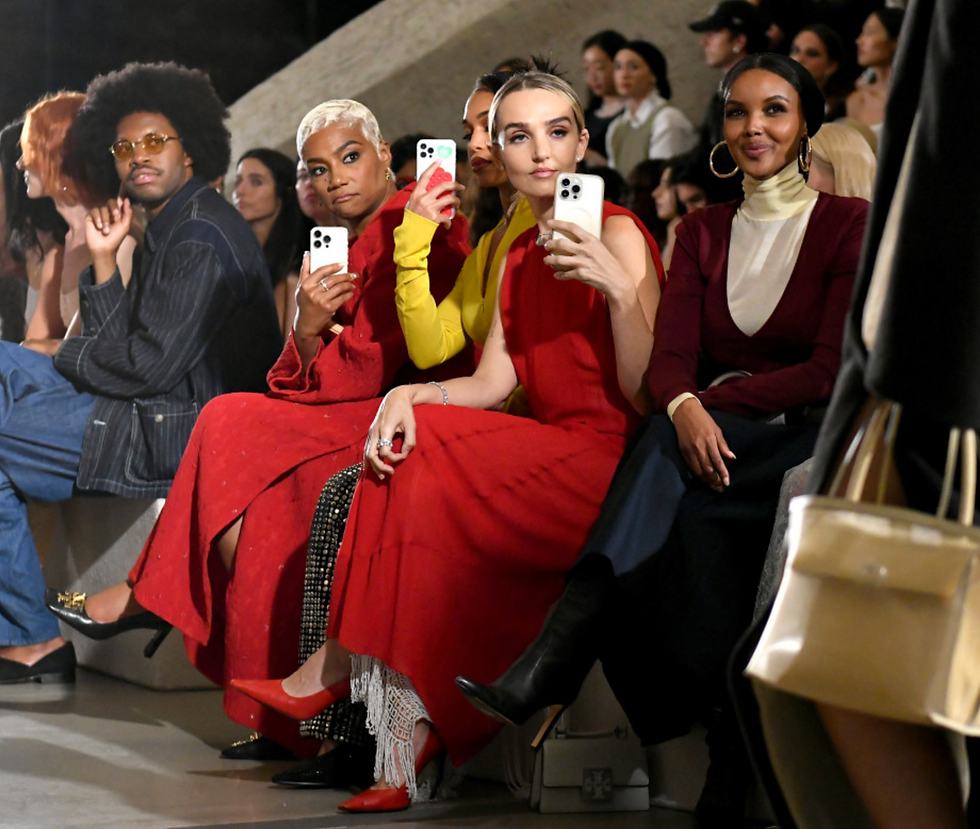
Front rows at Fashion Week or in intimate settings like Ralph Lauren’s showroom, used to be highly reserved for the top media powers, mega stars and billionaires, now they are crammed with under 30 Instagram pop-stars (mostly Asian) and most who could never dream of affording the clothes at retail. The power dynamic has shifted permanently as traditional gatekeepers no longer hold a monopoly on taste. Algorithms have democratized aspiration leaving brand executives scratching their heads. Some brands have had no choice but to dive in. Jimmy Choo has begun integrating these “grammers’ into their collections with co-designed capsules called "I DO CHOO" that in some cases have exclusivity clauses and wardrobe allowances. We might even say that many brands have found themselves in a hostage situation, afraid to escape.

A senior design associate at a top fashion brand recently told me, “We have no measure of the success of flying 6 girls in from Europe, house them, feed them, Uber their stay and hope their clicks drive a dress or bag. Five out of the six could be duds but one could gather 250K ‘likes’ and bring a few high end shoppers into the stores”. “It’s a crap shoot.”
In the end, the most powerful influence might still be the quiet kind: craftsmanship, consistency, and a product so good it doesn’t need a promo code.


Comments