

Stylish Comfort
When Did Looking Rich Start Feeling This Comfortable

Running shoes…at one point were for, well… running. They lived near the treadmill, smelled
faintly of effort, and appeared at 6 a.m. beside people who voluntarily signed up for half marathons. Then something happened. As more would be athletes started walking and training, it seems the sneaker escaped the gym and quietly took over everyday life. Now it appears at luxury lunches, airport lounges, parent pick-up lines and yes, occasionally next to dress pants. (something we do not recommend!)
The rise of the everyday running shoe may be one of the biggest style shifts of the last decade. Comfort stopped being a guilty pleasure and became status and it opened a whole new category for high end brands like Chanel, Gucci, Louis Vuitton and Balenciaga.
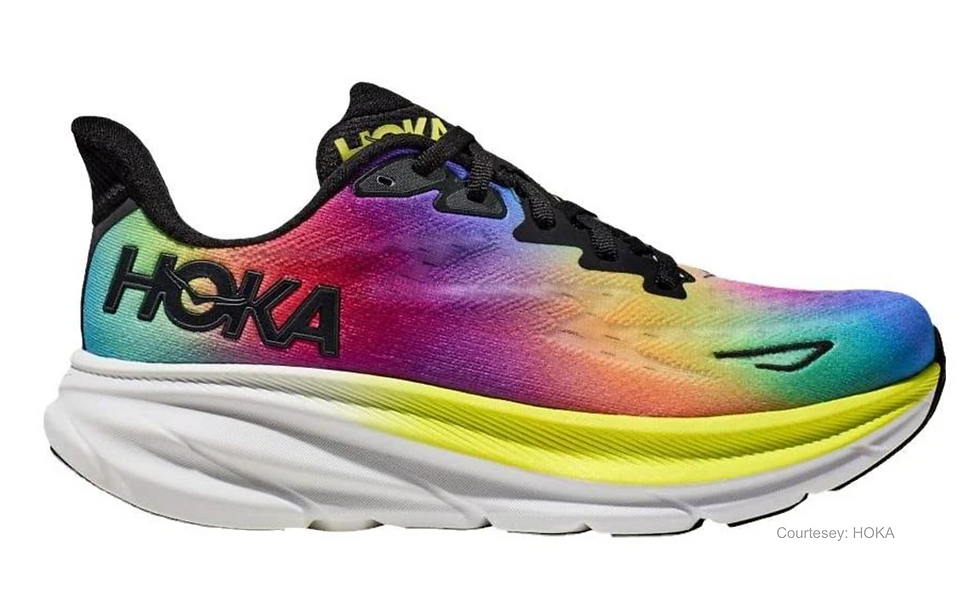
Track brands like HOKA turned maximal cushioning into mainstream fashion. Once associated mostly with distance runners and orthopedic recommendations, Hoka’s oversized soles became shorthand for people who value comfort or want everyone to believe they walk 10,000 steps daily. Popular models such as the Clifton and Bondi often retail around $150–$175, while premium performance offerings climb above $220. Current Hoka models like the Bondi 9 commonly list near $170, with flagship shoes like the Skyward X reaching $225.
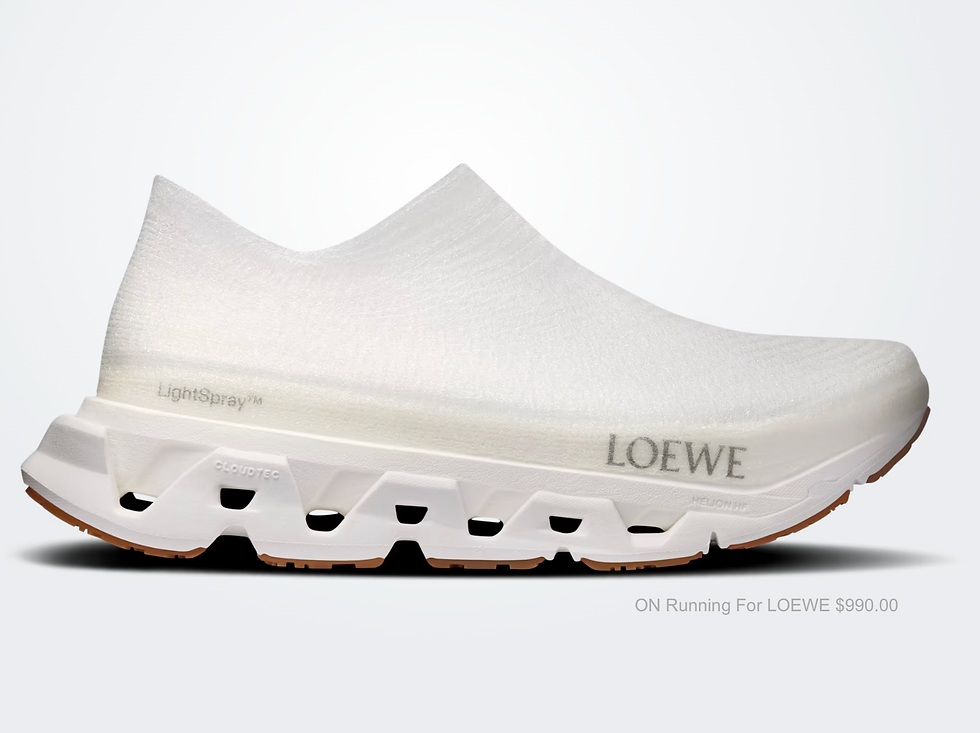
Then came On (often called On Running), the Swiss brand with futuristic cloud pods underfoot. On became the shoe of startup founders, finance executives, and people carrying $18 oat milk lattes through airports. Typical On shoes sell for roughly $140–$190, with performance models pushing higher and designer collaborations at around $1,000.00 The appeal is not merely cushioning; it’s the aesthetic. On shoes seem to be acceptable away from the treadmill.

Meanwhile, Skechers executed one of the more fascinating reinventions in footwear. For years, Skechers occupied a lower rung in fashion hierarchy. Today, the brand’s walking shoes and slip-ins attract everyone from retirees to busy professionals seeking comfort without spending luxury-sneaker money. Joe Biden made them his daily wear his last 2 years in office and Bill Clinton can commonly be seen catching up to Hillary in his Skechers Slip-ins. Many everyday styles fall between $70–$120. That price point matters. Not everyone wants to spend nearly $200 to look casually athletic while buying coffee.
Price inflation in sneakers also reveals something bigger: running shoes became aspirational products. The average premium running shoe now frequently sits around $150–$180. A decade ago, that would have sounded absurd. Spending close to $200 on footwear intended for errands would have drawn concern from spouses and financial advisors alike. Now people casually own multiple pairs: one for walking, one for travel, one for actual exercise, one for “nice athleisure.”

This trend has fascinated the luxury houses and they have dug in.
Prada introduced technical sneakers blending performance influence with Italian luxury, often priced from $900 upward. Gucci continues releasing chunky athletic-inspired shoes frequently exceeding $1,000. Loro Piana offers understated luxury sneakers where quiet wealth whispers through suede and cashmere, often costing $800–$1,200+ and Balenciaga practically built an empire convincing buyers that intentionally oversized running silhouettes should command four figures even if they weigh 3lbs!

Ironically, genuine runners often still buy practical models under $180 while luxury consumers spend $1,000 for shoes unlikely to see a treadmill. The broader cultural shift is less about footwear and more about priorities. We increasingly value mobility, wellness, and appearing busy. Running shoes communicate efficiency. They suggest you could board a flight, walk three miles, attend a casual meeting, and survive an airport delay without changing footwear.
Leather loafers still matter. Belgian shoes still have a place. A beautiful pair of suede drivers beside a vintage sports car remains timeless, but modern status increasingly whispers through cushioning and perhaps a logo other than a Swoosh.
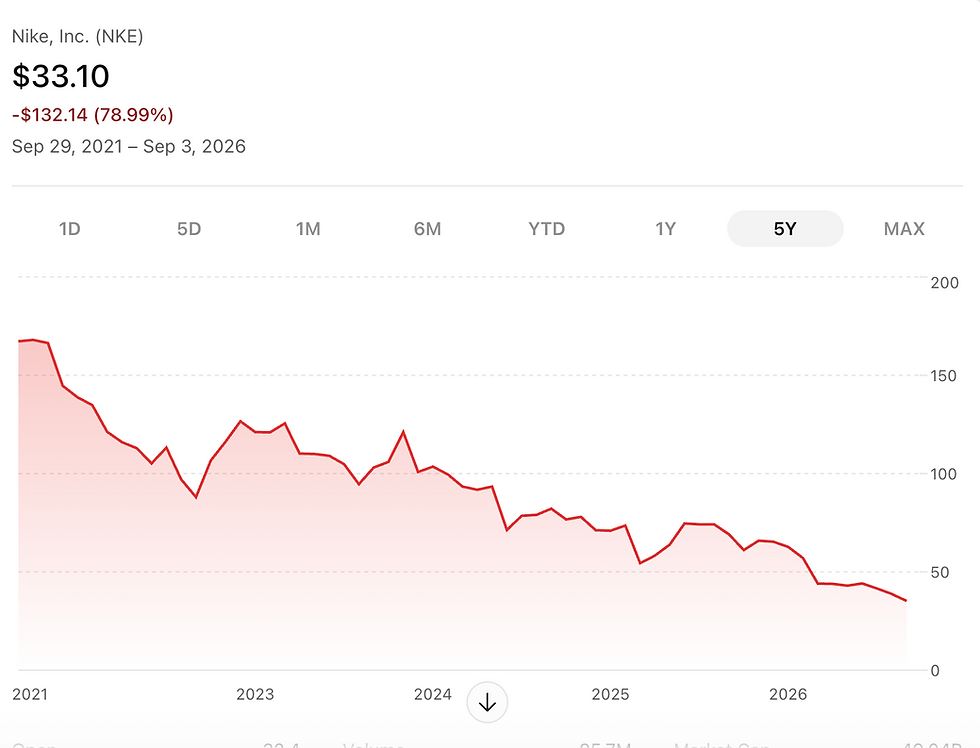
The man in custom tailoring and pristine loafers still signals old-school success. The person wearing fresh Hokas, technical outerwear, and a sport watch may signal something newer: health, flexibility, and enough disposable income to spend $175 replacing shoes every six months. Because if you are a runner (or even a fast walker) most sneakers will last only 120-150 miles before seeing some tread wear.
In the end, every day running shoes won because they solved a problem luxury often ignored which is people like comfort, and once consumers discovered they could feel comfortable and fashionable, there was no going back.
The sneaker rack expanded. The dress shoe collection shrank.
That may be the most honest indicator of cultural change imaginable.


Comments