

The Met Gala
A Clown Show on a Couture Budget
The Met Gala is what happens when fashion stuffs itself up an ass and everyone calls it culture. It’s not the Oscars of fashion, it’s Halloween for ideologs who think they matter.
Every year, Anna Wintour anoints a theme that sounds like it was lifted from a rejected grad school thesis, and the industry nods along like its gospel. Then the parade begins. Not of style. Not of elegance, but of desperation. Pure, unfiltered, rhinestone-encrusted desperation.
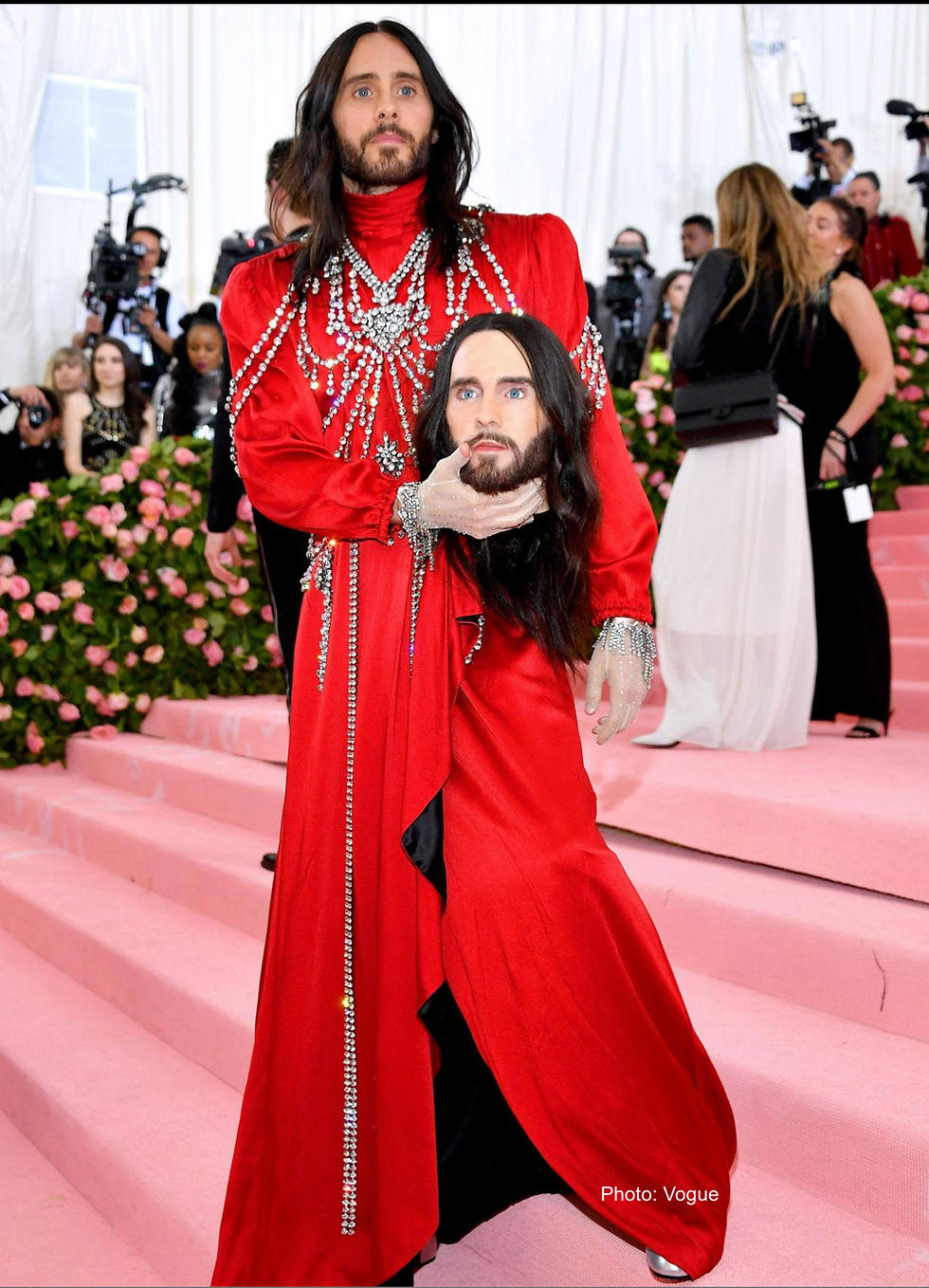
Let’s talk about the so-called “iconic” moments. Jerad Leto walked the carpet in a scarlet full length gown by Gucci, while holding a lifelike prop of his own head. We’re not sure what was worse, Leto in drag or the lifeless head on his arm that matched his personality? It didn’t push boundaries; it lowered them. Suddenly, anything absurd enough could be labeled “art” as long as it came with a press release and was worn by a B celebrity.

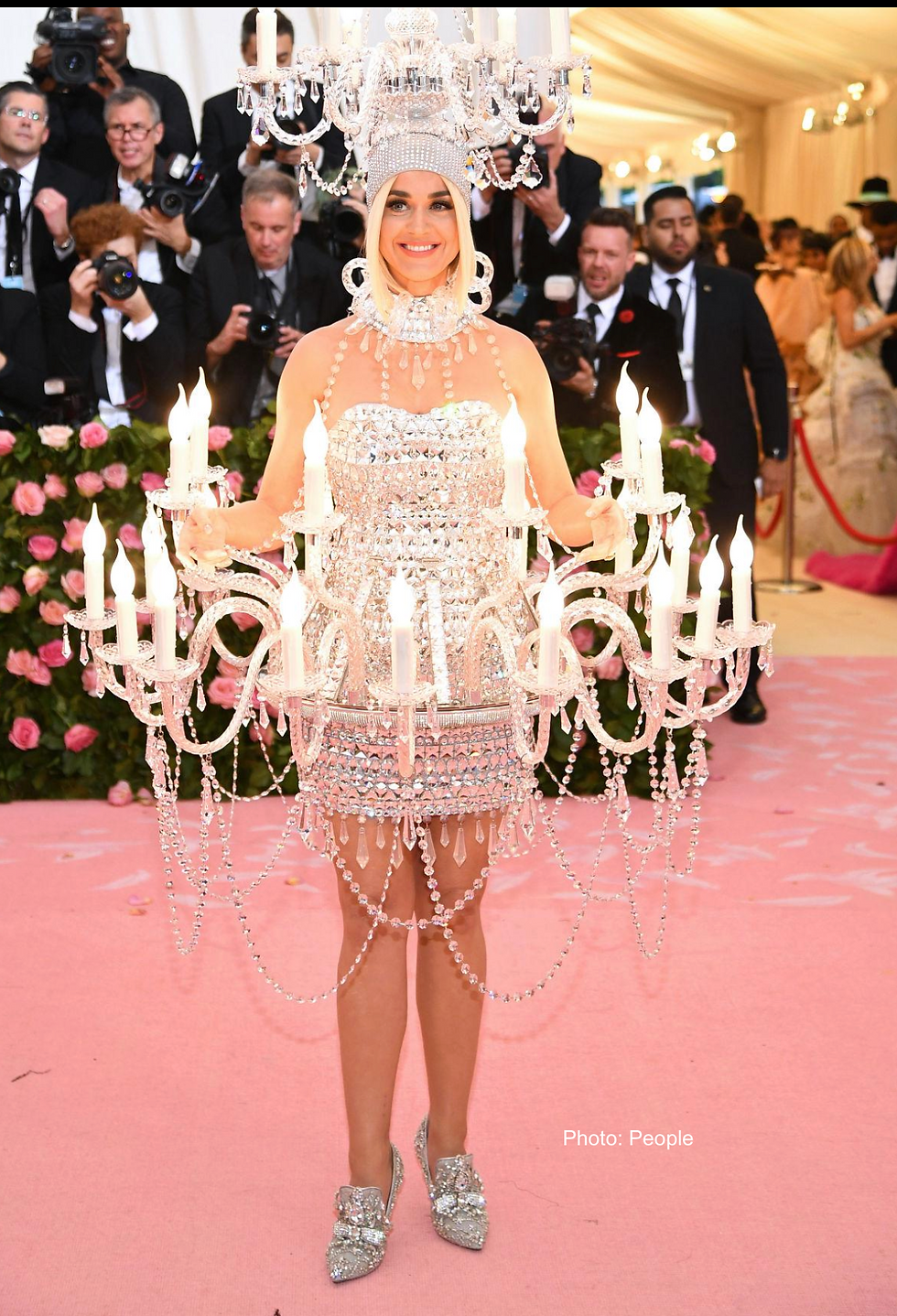
And then there’s Katy Perry, who has dressed as a cheeseburger with all the fixings and a French Chandelier. That’s fashion? Most nod, yet there is an industry out there too spineless to say, “this looks ridiculous.”
That’s the Met Gala in a sentence: no one wants to be the adult in the room. Because being the adult means admitting most of this looks like absolute garbage and that consistently starts with what the host, “Queen Anna Wintour” is wearing.

Quite horribly predictable, it’s a rotation of the same stiff, floral-heavy dresses that feel less “timeless” and more aggressively frozen in place. The bob never moves, the sunglasses never come off, and the snarl is always in place.
You may have heard that Wintour “moved up” at Condé Nast, as “…head of something to do with content…” and her replacement, Chloé Malle, looks like an 11th grade science nerd at Ethel Walker. Look for Malle to show up this year in something resembling field trip chic with hair and makeup done by Super Cuts.
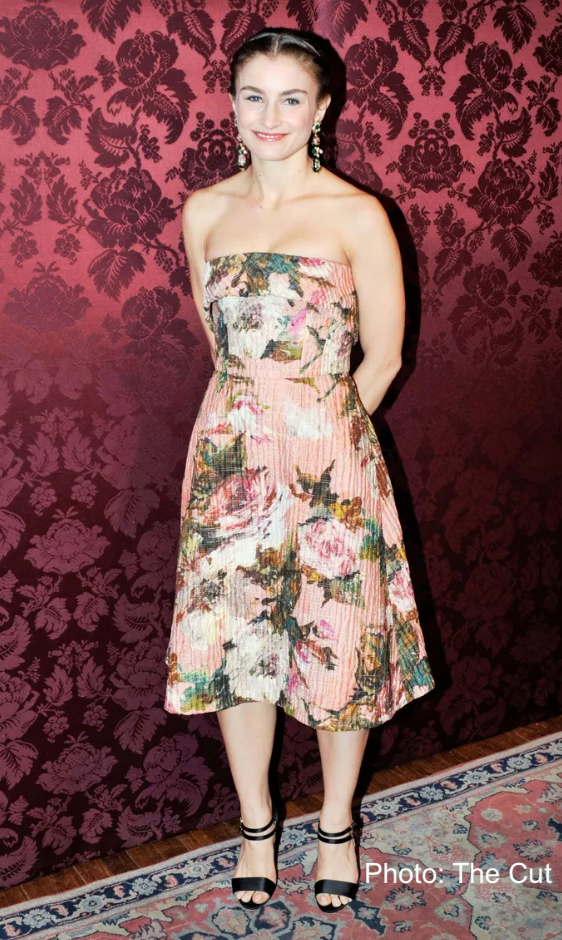
Designers, once craftsmen, now behave like attention-starved performance artists. The brief isn’t “make something beautiful.” It’s “make something loud enough to trend.” Feathers the size of patio umbrellas. Headpieces that look like failed architecture projects. Dresses that require three handlers and a forklift. It’s less atelier, more circus logistics. Then right on cue, Vogue rolls out the propaganda. “A daring statement.” “A bold interpretation.” We think not. If a normal person wore half of these outfits outside the Metropolitan Museum of Art Costume Institute steps, they’d be escorted somewhere quiet and evaluated. But slap a celebrity on it, add a camera flash, and suddenly it’s genius and cover worthy.
The worst part? The self-importance. The absolute, suffocating self-importance. You’d think these people were curing diseases the way they talk about “the moment.” It’s a dress. Or more accurately, it’s a costume engineered to survive six minutes on a red carpet and six hours on social media before being replaced by the next shiny distraction. The only thing that changes every year is how aggressively ugly the outfits get. It’s an arms race of bad taste, where winning means looking the least like a human being.
Yes, money is raised, (last year some $31million) fantastic. But let’s not pretend the primary goal isn’t a closed-loop ego festival where celebrities, designers, and media pat each other on the back for being “important.” It’s philanthropy as an accessory, where worn once and photographed heavily, will then quietly be forgotten. The truth is brutal but simple: the Met Gala isn’t about fashion anymore because fashion requires discipline, restraint, and taste, all things this event abandoned decades ago. It’s more about spectacle for the easily impressed or noise for the terminally online.
At this point, the only honest way to describe it is this: the Met Gala is a clown show with a couture budget.


Comments